SolaceofNight
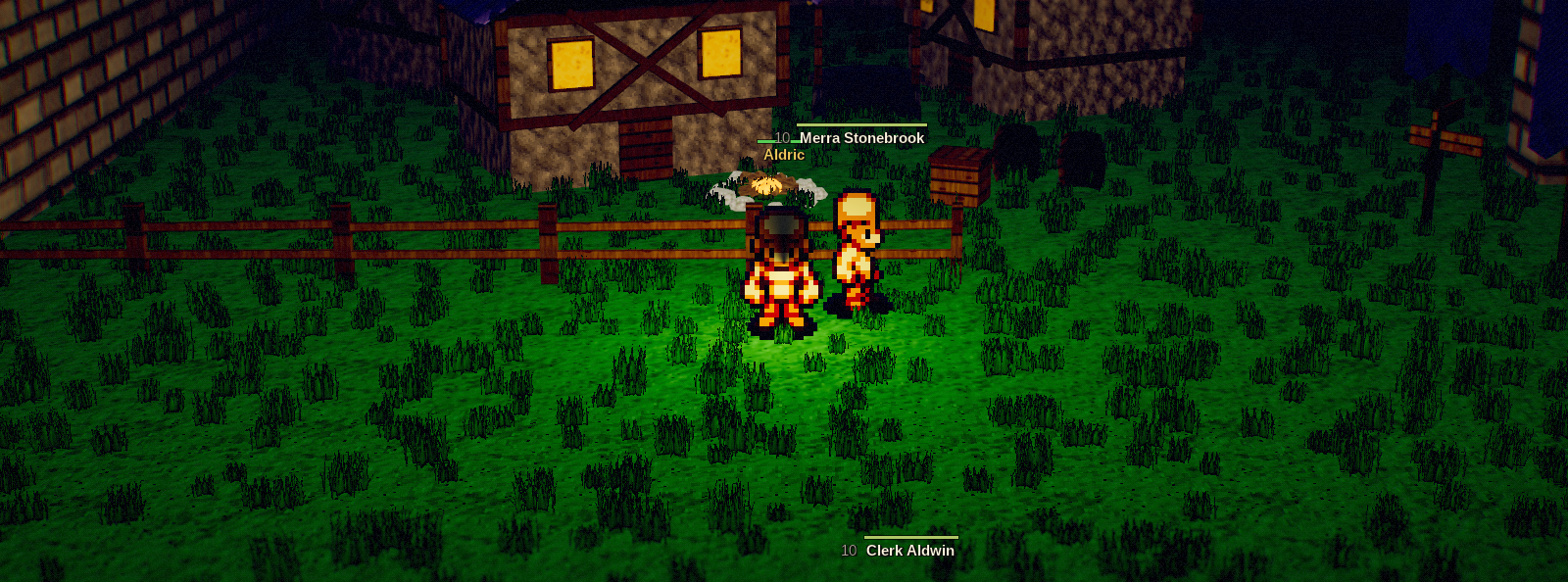
Two travellers lit only by a lantern in a dark village at night

The Long Dusk · year 106

They asked the sun for one more hour

It gave them the hour. It has been taking the payment ever since, four minutes a year, every year, for a hundred and six years — and on the evening they asked, the sky came open, and something walked in through the gap.

I

The Binding

Before the Fall there was one crown over the whole valley, and it had solved every problem but the last one. Hunger had a granary. Plague had a ward. War had a treaty that nobody had dared break in three generations. Only the night still came, and took its usual tithe of children and travellers and ships off the rocks, and answered to no crown at all.

So the Aetherate set its finest minds against the dark, and in the ninetieth year of its peace they climbed to the roof of the Sun Vault at Solhaven carrying the working they had spent forty years writing. They were not trying to kill the night. Every account agrees on that, and every account is defensive about it. They wanted one hour. One hour of held light, renewed each evening, so that the harvest could come in and the ships could make harbour and nobody's child would be lost between the last field and the door.

What was said up there is not known. Not withheld — not known. Every copy of the working burned that evening, in the same minute, in eleven different cities, and the men who had memorised it were on the roof.

The sky over Solhaven opened like a seam giving way. It stayed open until morning. And the morning was late.

It has been late ever since. Four minutes a year, near enough that you can set a calendar by it and the Brasswick almanacs do. A hundred and six years of four minutes is seven hours and change. There are valleys in the north that have not had a true noon since before anyone living was born, and the glass on the roof of the Sun Vault is still fused into ripples, and nobody has ever gone up to look at it twice.

We did not lose the sun. We spent it. The bill has been arriving every evening for a hundred years, and we have been paying it in lamp oil and pretending that is the same as settling it.

— Marshal-Regent Aline Verrow, to the ward-keepers of Solhaven

II

What came through the seam

The scholars of that age produced a hundred names for it and abandoned every one, because none of them would stick. What the common people called it is the name that lasted, and they chose it with the flat humour of survivors: the Guest. It was, after all, invited.

Nobody has seen it. That is the part that undoes people. In a hundred and six years there is not one credible account of a face, a shape, a silhouette against snow, a footprint in mud. What there is instead is the aftermath, and the aftermath is consistent enough to be worse: hamlets found at first light with the doors standing open and the tables laid for a meal that was never eaten; a stretch of the Thornwake road, sixty paces long, that the trees lean away from and nothing has grown on since; herds that walk into water.

And lanterns. Always, in every account, lanterns — moved, extinguished, relit, arranged. The Guest has an interest in lantern-light that no scholar has explained and every traveller has learned to respect. Whether that interest is hunger or curiosity or something with no word on either side of the river is the question that a century of ward-keepers, warlocks and grave-wardens have all failed to answer.

It does not hunt. Hunting implies effort. It arrives, the way weather arrives, and each year the world gives it four more minutes to arrive in.

III

The two answers

The Fall did not divide the world. The winter afterwards did. When it became clear the wards could be held over some of the valley but not all of it, the Aetherate's heirs drew the line where the silver would reach, and closed it, and told everyone on the wrong side of that line that it was temporary.

It was not temporary. Everything since — the war, the silence, the two names the world now answers to — comes out of one night of arithmetic and the door that was shut at the end of it.

Solheim, who kept the light

Inside the line: Solhaven's lamp-wardens, the deep-holds of Karrowdeep whose silver the wards are made of, the elves of the Thornwake who watched the sky from before it broke and have never once said they forgive it, and the workshops of Brasswick that keep the whole apparatus turning.

A hundred years of unbroken vigil. Not one night's lapse, in a century, anywhere on the ring — a thing no empire before them managed with anything. They hold that the Binding was a mercy that slipped, that the dark is simply what is left when the light fails, and that the lamps are the only reason there is a valley here at all rather than open ground with the tables laid.

They may be right. It would explain why they will not discuss the tithe, which has been raised four times in twelve years, or what exactly the wards are burning.

The Nightmarch, who were left outside

Outside the line: the war-holds of Grimhold, the Pale Cairns and their dead who declined the passage, the herds of Broadhorn Mesa, the ash flats of the Cinderpit. They were not exiled for any crime. They were on the cheaper side of a calculation, in the coldest winter in record, and they were told to wait.

They stopped waiting. They went out into the long dark that was supposed to kill them and discovered, over three generations of dying to learn it, that it is survivable — that you can walk it, chart it, bargain with parts of it, and come home. Their name for the dark is the one this whole age is named for, and it does not translate cleanly; the nearest is solace.

And they say the wards are drinking the same thing the sun is made of. That every lamp Solheim keeps burning tonight is taken off the front of tomorrow. That the sun is not dying — it is being spent, and it is being spent to keep one city comfortable.

One of those accounts is true. The archives that could settle it burned in eleven cities in the same minute, and the only people still standing who were alive that evening are the wraithkin of the Pale Cairns, who were not alive for long afterwards, and who will not say.

IV

The lands, as the almanacs have them

Solhaven

The lamp-city, and the place it happened. Eleven thousand wicks trimmed before every dusk by a guild that outranks the garrison. The Sun Vault still stands at the centre of it with its roof fused to glass, sealed, guarded, and never spoken of above a certain volume.

Karrowdeep

The dwarf-holds, and the silver the wards are made from. They gave up surface calendars two generations ago on the grounds that a calendar that keeps being wrong is worse than none. Below the ninth gallery the seams are running thin, and the Karrow have not told Solhaven yet.

The Thornwake

Old forest, old grudge. The elves who live in it were adults when the sky was whole and can describe the colour of a pre-Fall evening in a way that reduces human listeners to silence. Sixty paces of their eastern road grow nothing at all.

Brasswick

Gnome workshops and the arithmetic nobody asked for. They measured the ward-draw against the shortening of the year, published once, were told very firmly not to publish again, and have continued measuring.

Grimhold

An orc fortress built facing the wrong way — outward, into the dark, on the theory that the thing worth watching was never the river. Their honour predates the Aetherate that shamed them and will outlast whatever is coming.

The Pale Cairns

A burial field where the burying did not take. The wraithkin who rise from it are not confused, not vengeful and not interested in explaining themselves, but they are punctual, and they remember the winter of the closing from the other side of it.

Broadhorn Mesa

The high tableland, and the last ground in the valley that still gets a true noon. The minotaur herds hold it as a sacred trust and count the shortening in a knotted cord that is now longer than a grown bull.

The Cinderpit

Ash flats over something that is still warm. The goblins there will sell you the lantern, the oil, the spare wick and a policy against all three, and they are the only people on either side who talk to both.

V

Things said on the road, and mostly believed

Count them going out

Count the lamps on the road out and count them again on the road home. Old hands swear there are more on the return, and that the extra ones are always placed exactly where you would have wanted one.

Never the second question

Every warlock in Grimhold learned their craft from something that agreed to be asked. Ask them what it wanted in return and you will get a change of subject, which from that people is an answer.

The doors were opened from inside

This is the detail the ward-keepers leave out of the reports of the emptied hamlets, and it is in every one of the originals.

Four minutes

Children on both banks are taught the number before they are taught to read. Nobody has ever needed to explain to them what happens when it finishes.

The world as it stands

Lantern light spilling across a dark village at night
Midnight inside the ring. This is as bright as it gets out there now.
A walled Solheim keep with slate-roofed cottages at midday
A ward-keep on the west bank, on one of the afternoons still worth the name.
Character creation showing races of both factions
Eight peoples, and a century of reasons to be one of them.
Character select screen showing an orc fighter of the Nightmarch
Somebody's grandchild, still outside the line.

Enter the world

Solace of Night is an HD-2D massively multiplayer role-playing game. You arrive in year 106 as nobody in particular, on one bank of the river or the other, and you find out for yourself which side has been lying.

Trial
Ten days free, to level 20.
Subscription
$5 a month, level cap 60, no cash shop and nothing for sale that changes a number on your character.
Requirements
64-bit Linux, OpenGL 3.3, about 200 MB. The client keeps itself current.

Questions

So which side is telling the truth about the wards?

That is what the century-long story between level one and level sixty is about, and each faction's campaign answers it in its own favour. Only one of them is honest with you. Finding the seam between the two accounts is the game.

Can I ever speak to the other faction?

No. Their speech reaches you with its rhythm, its length and its punctuation intact and none of its meaning, and cross-faction whispers do not connect at all. Names survive. Everything else is inference, and inference is how the war is fought.

What does HD-2D mean here?

Real 3D geometry wearing hand-made pixel art, lit with a modern high dynamic range pipeline, with sprite characters standing in it. A village reads like a lamplit diorama rather than a tile map.

Which platforms, and when?

Linux first, since that is what it is built on, with other desktop platforms following through the same self-updating client. The world is playable now and grows a zone at a time.